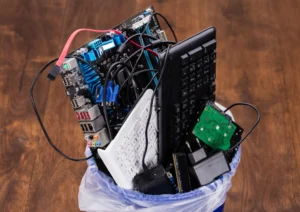
When sensitive data leaves your building on a hard drive, the security risk follows. If your business handles confidential employee records, financial data, healthcare information, or proprietary technology, you might prefer on-site destruction. On-site data destruction service eliminates risk at the source, as it securely destroys all data before your equipment moves anywhere.
Here at ComSources, we offer a data destruction service as part of our standard ITAD (IT Asset Disposition) process. On-site data destruction process, however, takes place at your location, under your supervision, using ADISA-certified wiping software. Just as with off-site data destruction, every device is accounted for, and every wipe is logged. At the end of the process, every client should receive a detailed audit report and a certificate of data destruction.
What Is On-Site Data Destruction?
On-site data destruction is the secure erasure of sensitive information directly at your facility. Instead of sending your hard drives and other devices to a third-party location for processing, a specialized company destroys the data on-site.
Whether on-site or off-site, the process covers hard drives, solid state drives, laptops, desktops, servers, backup tapes, and other electronic storage media. Physical hardware shredding destroys residual value and creates e-waste. That’s why at ComSources, we use enterprise-grade, ADISA-certified wiping software to render data completely unrecoverable. Our process preserves the equipment, which can then be resold, recycled, or reused.
This approach is perfect for bulk data destruction scenarios, such as data center decommissioning, office relocations, end-of-lease device returns, and large-scale IT refresh cycles. Whether your business is retiring 10 laptops or a large facility needs to wipe 1,000 drives in a data center, the process should be the same: methodical, documented, and fully compliant.
Why On-Site Destruction Matters for Your Business
Data breaches with retired IT equipment are more common than most businesses realize. A device decommissioned without proper data sanitization can remain a liability long after it leaves your office. The consequences range from regulatory fines to reputational damage. In sensitive industries such as healthcare and financial services, the legal exposure can have serious repercussions.
Several compliance frameworks directly govern how businesses must handle data destruction:
HIPAA
HIPAA (Health Insurance Portability and Accountability Act) requires covered entities and their business associates to implement policies for the destruction of electronic protected health information (ePHI). Improper disposal is a recognized category of HIPAA breach.
NIST SP 800-88
NIST SP 800-88 provides the federal standard for media sanitization, defining Clear, Purge, and Destroy methods for different threat levels. Our off-site wiping protocols fully support NIST standards.
GDPR
Other Compliance Frameworks
SOX, PCI-DSS, and financial regulations each include requirements for the secure, compliant disposal of sensitive financial data and the media that stores it.
Ideally, on-site data destruction should keep your team in control of the process, reduce chain-of-custody risk, and produce the documentation you need to demonstrate compliance to auditors, regulators, and clients.
The On-Site Data Destruction Process
When you hire a company to handle the on-site destruction process, here is what they should do, from start to finish.
1. Asset Inventory and Check-In
Before any wiping begins, every device should be logged. The on-site destruction team should record the manufacturer, part number, and serial number of each asset. That establishes the baseline for your audit report and verifies that every piece of equipment is accounted for, so nothing is processed anonymously.
2. ADISA-Certified Secure Wipe
ComSources uses SoftThinks, an ADISA-certified data sanitization platform, to perform the wipe, and any company that handles sanitization should use something similar.
SoftThinks has held ADISA certification since 2015 (recertified at Level 2 in 2019). Its sanitization module supports 15 wiping protocols that can be selected and chained based on drive type and your organization’s compliance requirements. Supported standards include, among others:
- NIST 800-88, including Secure Erase and Enhanced Secure Erase
- The U.S. DoD 5220.22-M: 3-pass and 7-pass ECE variants
- Bruce Schneier’s 7-pass method
- German VSITR
- Canadian RCMP TSSIT OPS-II
- Peter Gutmann’s 35-pass method, and others.
For solid state drives, SoftThinks applies firmware-level commands that meet or exceed NIST purge requirements, completing most SSDs in 30 to 60 seconds with minimal strain on the drive.
3. Detailed Audit Report and Certificate of Data Destruction
Once wiping is complete, every client should receive a comprehensive audit report that includes the manufacturer, part number, and serial number of each processed asset, along with the specific wipe protocol applied, SMART diagnostic results, and confirmation of a successful wipe.
A certificate of data destruction should be issued for each device, giving you asset-level proof that every drive in the batch has been properly sanitized. This report is not just a generic batch certificate: it’s granular documentation that stands up to audits.
4. Permanent Cloud Storage of Wipe Records
All wipe records should be stored in the cloud in perpetuity. If you need to demonstrate compliance months or years after a destruction event, for example, for a regulatory audit, an insurance claim, or due diligence during a merger, those records should be available. This long-term retention of destruction documentation is one of the most practical assurances ComSources provides in our ITAD process, and it is something a paper certificate alone cannot offer.
What You Should Sanitize
A comprehensive on-site data destruction service should cover the full range of electronic storage media, including:
- Hard drives (HDD) and solid state drives (SSD)
- Laptops, desktops, and workstations
- Servers and storage arrays
- Backup tapes and removable media
- Networking equipment containing stored configurations and credentials
Note that you should not physically destroy or shred hard drives; instead, use certified software-based erasure to sanitize data. This makes data unrecoverable but preserves the hardware for its next lifecycle stage.
This approach is deliberate: responsible IT asset disposition keeps viable equipment out of landfill. Whenever drives can be wiped and reused, this is the environmentally responsible method. When equipment reaches the end of its life, it is directed toward certified e-waste recycling rather than unnecessary destruction.
Bulk Data Destruction for Large-Scale Projects
Organizations that are decommissioning data centers, undergoing large technology refreshes, or retiring multi-site equipment need to securely destroy data at scale, on schedule, without disrupting operations.
If you wish to do this on-site, find a team that can process large volumes of devices. They should log and wipe each asset systematically and deliver a consolidated audit report at the end of the engagement. The same asset-level documentation applies whether you have 20 devices or 2,000.
How to Select a Vendor for On-Site Data Destruction
Not all data destruction services offer the same level of accountability. If you are assessing vendors, consider the following:
Certified wiping software
Look for ADISA-certified tools. As an independent certification body, ADISA tests data sanitization products in a laboratory to verify that data is unrecoverable after the wipe process. A vendor that uses certified software provides independent verification, not just a self-attested claim.
Asset-level documentation
A certificate of destruction that covers a batch without itemizing individual devices offers limited value. Request a report listing each asset by serial number and confirming the wipe for each asset individually.
Long-term record retention
Records stored only on paper certificates can be lost. A vendor that stores records in the cloud gives you durable, accessible proof of compliance in perpetuity.
NIST-compliant protocols
For most US-based organizations, NIST SP 800-88 compliance is the baseline standard. Confirm the vendor supports it and can demonstrate which specific sanitization method was applied to each device.
ITAD integration
For most US-based organizations, NIST SP 800-88 compliance is the baseline standard. Confirm the vendor supports it and can demonstrate which specific sanitization method was applied to each device. This is a vital consideration in choosing an IT Asset Disposition Partner.
Environmental responsibility
Confirm that devices not suitable for reuse are directed to certified e-waste recycling and not thrown into general waste streams. E-waste contains hazardous materials that require responsible disposal, and a reputable ITAD company will have a clear policy for their disposal.
Other factors
Some organizations also seek NAID AAA certification, which applies to companies that provide physical media destruction services. Our service, for example, is built around certified software-based erasure rather than physical shredding, but the underlying principles are the same: documented processes, independent verification, and auditable outcomes.
In addition to certificates of data destruction that we issue, the program we use (SoftThinks) tracks every item by part number, serial number, and purchase order. This information is stored in their cloud in perpetuity for proof that all units have been wiped. SoftThinks is an ADISA-certified data destruction software service.
On-Site Destruction as Part of Your ITAD Strategy
Data security and asset value are not competing priorities. They work together when you have the right IT asset disposition partner.
On-site destruction can be a standalone service or part of a comprehensive ITAD engagement that covers collection, wiping, auditing, resale, and e-waste recycling. Ideally, find an on-site data destruction service that integrates with broader ITAD services. This way, devices can be routed into a buyback program, refurbished for redeployment, or recycled responsibly after they are securely wiped and documented. While your decommissioning project meets its data security compliance, you generate a return on the hardware you are retiring. Many clients are surprised by the residual value available in equipment they assumed was worthless.
In addition to certificates of data destruction that we issue, the program we use (SoftThinks) tracks every item by part number, serial number, and purchase order. This information is stored in their cloud in perpetuity for proof that all units have been wiped. SoftThinks is an ADISA-certified data destruction software service.
Frequently Asked Questions
Does ComSources physically shred or destroy hard drives?
No. ComSources uses certified software-based data erasure without physically destroying the drive. This approach renders the data completely unrecoverable while still preserving the hardware for responsible reuse or recycling. It is a more environmentally sound method and, when performed with certified wiping software and proper documentation, provides the same level of data security assurance.
What proof do I receive that my data has been destroyed?
Every client receives a detailed audit report that includes the manufacturer, part number, and serial number of each processed device, along with the wipe protocol applied and SMART diagnostic results. A certificate of data destruction is issued at the asset level, meaning each drive has its own record of destruction. All wipe records are also stored in the cloud in perpetuity, so they remain accessible for future audits.
Which wipe standards does ComSources support?
ComSources uses SoftThinks, an ADISA-certified platform that supports 15 wiping protocols, including NIST 800-88 (Sanitize, Secure Erase, Enhanced Secure Erase, and Clear), DoD 5220.22-M (3-pass and 7-pass ECE), Bruce Schneier, Peter Gutmann (35-pass), German VSITR, Canadian RCMP TSSIT OPS-II, US Army AR380-19, US Air Force 5020, the Department of Energy standard, NAVSO P-5239-26, and Russian GOST P50739-95, among others.
Can ComSources handle bulk data destruction for a data center decommission?
Yes. ComSources has the know-how for large-scale data destruction projects, including full data center decommissioning. Our team can process high volumes of devices systematically, with full asset logging and a consolidated audit report delivered at the end of the project. Contact us to discuss your project scope and timeline.
Is your data destruction service HIPAA and NIST compliant?
Our process supports compliance with HIPAA, NIST SP 800-88, GDPR, and other data protection regulations. We use ADISA-certified wiping software and apply the appropriate sanitization protocol for each media type. We also provide asset-level documentation that satisfies the record-keeping obligations these regulations impose. We recommend working with your legal or compliance team to confirm that our process meets your specific regulatory requirements.
What happens to the equipment after the data has been wiped?
After secure data destruction, equipment is evaluated for its next lifecycle stage. Devices with residual market value can be routed into ComSources’ IT asset disposition and buyback program, where they are refurbished and resold. This process generates a financial return for your organization, which can be used to buy new equipment. Equipment at the end of life is directed to certified e-waste recycling for responsible disposal of all electronic components and materials.
How does on-site destruction differ from off-site data destruction services?
Off-site destruction transports your devices to a third-party facility, creating a period during which the equipment and its data are outside your direct control. On-site data destruction erases that gap. The wipe happens at your location, in your presence, and the documentation is generated in real time.